

The Evolution of Athletic Development
How My Journey Shaped My Coaching and Understanding of Human Performance

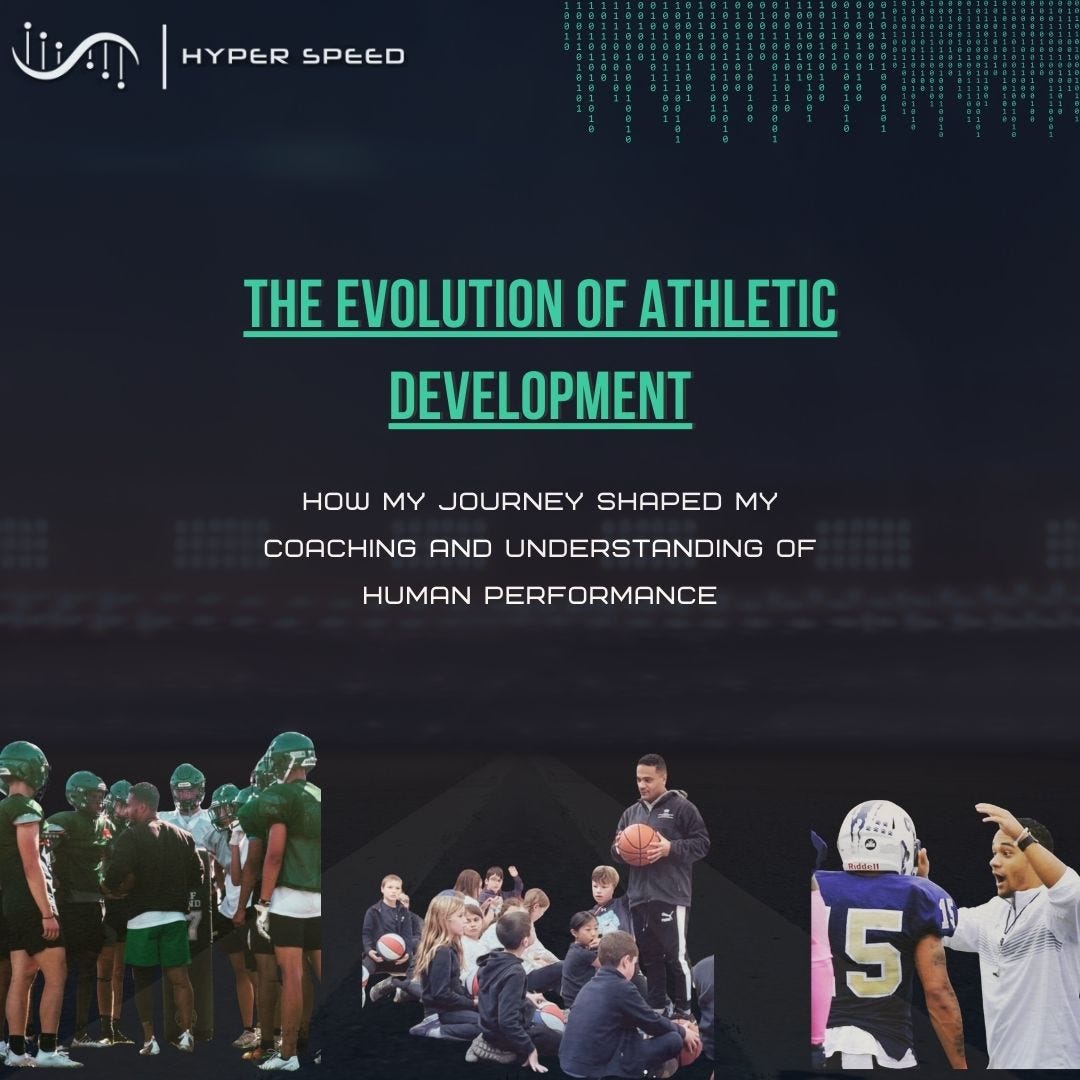
Athletic development is more than just physical training—it’s a progression of mind, body, and discipline that transforms an individual into a high-functioning athlete. My journey in sports—from a hyperactive kid to a coach and human performance specialist—has shaped my understanding of movement, psychology, academic excellence, and the infrastructure needed to support elite development.
Early Foundations: The Role of Movement in Athletic Development
Before I even understood competition, I was obsessed with movement. My first exposure to athleticism wasn’t football or basketball—it was watching my cousin practice gymnastics and cheerleading. At a young age, I mimicked her movements, developing flexibility and body control before I ever stepped onto a playing field. That unstructured, exploratory movement became the foundation for my ability to command my body later in life.
Then came wrestling. Wrestling instilled a different layer of athleticism—aggression, mental toughness, and one-on-one competition. Unlike team sports, there was no hiding in wrestling. Your success or failure was entirely in your control. Winning my first 25 matches gave me an early taste of dominance, but losing for the first time was a gut check. I became obsessed with scorekeeping, losing sight of execution. That lesson in mental discipline—focusing on the process instead of external validation—would later inform how I coach young athletes.
From Chaos to Structure: Entering Football
Football was different. Unlike wrestling, it was controlled by officials, segmented into plays, and required a mix of individual skill and team cohesion. It was the first sport where I had to learn strategy, execution, and tactical patience. At first, I was just an aggressive kid who liked hitting people, but over time, I developed the ability to process the game at a high level—understanding angles, movement mechanics, and decision-making.
Football also introduced me to a harsh reality: physical wear and tear. I started hitting before my body was fully developed, and I quickly learned that raw athleticism wasn’t enough. Durability, flexibility, and smart training were just as critical as speed and strength. Looking back, I realize that exposure to contact sports early built a mental edge that I carried into coaching.
Defining Athleticism: The Physical and Mental Components
Many people misunderstand what it means to be an athlete. Athleticism is often seen as natural talent—speed, power, agility—but being an athlete is about skill execution. Some people are born with fast-twitch muscle fibers and the ability to pick up movements quickly, but true athleticism is developed through repetition, adaptability, and intelligent training.
As a coach, I’ve seen naturally gifted athletes who lack discipline, and I’ve seen less genetically gifted players outwork them and surpass them. Athletic development is about learning movement patterns, hand-eye coordination, reaction time, and how to process the game mentally. The best athletes are students of movement—whether it’s a quarterback understanding defensive schemes or a basketball player anticipating movement before it happens.
The Science of Training Young Athletes: What Matters Most?
When training young athletes, I assess three primary factors before any drills even begin:
Posture & Movement Patterns – How does the athlete walk? Are they front-chain dominant? Do they have valgus knees or tight hip flexors? Their baseline movement dictates their injury risk and performance potential.
Parental Influence & Mental Framework – How do their parents view their development? Are they forcing sports, or is the athlete internally motivated? A kid with passion and drive will always progress faster than a kid just checking a box.
Competency & Adaptability – Can they follow instructions? How quickly can they adjust to new movement patterns? This tells me their ceiling for skill acquisition.
I also focus heavily on weight distribution and movement mechanics. If a wide receiver or defensive back is carrying extra weight at a young age, it’s a red flag that their conditioning and lifestyle need adjustment. More importantly, it tells me that their future movement efficiency will be compromised.
Multi-Sport vs. Specialization: The Long-Term Athletic Debate
There’s a long-standing debate on whether athletes should specialize in one sport or play multiple sports. I always recommend multi-sport development for as long as possible. Each sport develops different movement patterns that carry over. Wrestling made me tougher for football. Gymnastics gave me balance and flexibility. Basketball improved my footwork and reaction time.
But there comes a time when specialization is necessary. Around the junior year of high school, athletes need to focus on refining their primary sport if they want to compete at an elite level. Specialization too early can lead to burnout and overuse injuries, but waiting too long can limit opportunities. The key is intentional specialization—knowing when to shift gears based on skill level and goals.
The Role of Intelligence in Athletic Performance
One of the biggest misconceptions in sports is that athleticism and intelligence are separate. The best athletes in the world are highly intelligent—not just in their sport, but in their ability to process information quickly. Great players understand movement patterns, opponent tendencies, and situational awareness at an elite level.
Academic excellence often correlates with coachability and processing speed. A kid who excels in school typically follows directions well, understands game plans, and can apply adjustments mid-play. Athletes who disregard academics usually lack the discipline needed to sustain long-term success. I have no patience for athletes who believe talent alone is enough—because at some point, discipline and intelligence separate the good from the great.
Preparing for the Next Level: The Blueprint for Going Pro
For young athletes dreaming of going pro, the first step is studying the landscape. Who else has made it from your region? What body type and skill set do successful players in your position have? Understanding the pipeline to success is critical.
Once that foundation is set, the focus shifts to:
Movement Mastery – Developing flexibility, strength, and injury prevention habits.
Skill Execution – Training in game-specific scenarios to replicate competition settings.
Physical Standards – Meeting the benchmarks required for elite evaluation.
Game IQ – Becoming a student of the sport, understanding strategy, and processing at a high level.
Many young athletes get caught up in lifting weights and sprinting, thinking that’s the key to success. But at the highest level, it’s about execution under pressure. If you can’t apply your athleticism in a game scenario, you won’t get noticed. It’s about simulating success in practice so it becomes second nature in competition.
Final Thoughts: The Coach Wilson Approach to Athletic Development
Everything I’ve learned in my career—from movement science to game strategy—has reinforced one belief: athletic development is about progression. It’s about mastering movement at a young age, sharpening mental resilience through competition, and refining skill execution as you mature.
Whether you’re a parent looking to develop your child’s potential or an athlete chasing the next level, the key is understanding that athletic development isn’t linear—it’s a process of continuous evolution.
Train smarter. Move better. Compete harder.